| |
Stromatolites are fossil domal structures formed by microbial colonies. Evidence suggests they have lived on earth since the Mesoarchean,
3.1-3.5 billion years ago. This example is a fossil algae from England. Stromatolites may have played a significant role in changing the chemical
composition of the atmosphere by increasing oxygen levels, setting the stage for the Cambrian explosion.
Today there is renewed interest in these ancient signs of life. In a previous version of this web page there was a link to a photo which some thought might show a
stromatolite on Mars. That link no longer exists. A whole lot of websites have cropped up with interesting photos arguing that various other fossils appear in the rover images. An equal number of sites debunk the idea that there could be fossils on Mars. To review the evidence, google "Mars fossils" or something of the sort.
The beautiful tree on a windswept hill in this ancient fossil made me want to set it in an undulating environment with beach stones and a fossil ammonite
negative. The labradorite beads match the fossil nicely. Labradorite is a bit of a sleeper-- the material is dull until the colorful shiller is observed glowing on the surface. This play of light is called labradorescence. The labradorescence in these beads ranges from typical blues
and violets through greens, with bits of yellows and oranges. The color display is due to lamellar intergrowths inside the crystal.
When a ray of light enters a layer it is refracted back and forth by deeper layers
producing a light ray coming out that has a different wavelength than when it went in. Labradorite is supposed to promote the wise use of
psychic abilities.
Shall I tell you how this piece started life with three stromatolites? How I couldn't stand it and took it entirely apart? This is the reason
the professional photo is cropped-- she shot a different piece! My own photo (below) shows the form of the completed necklace. The centerpiece is
strung on cable for strength, the other strands are hand knotted on silk.
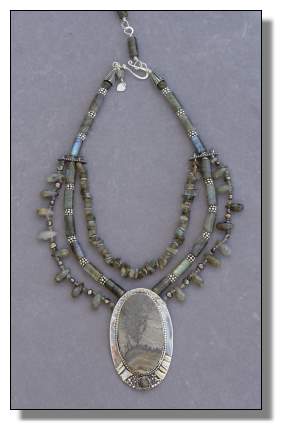
LOVE BEADS: This piece includes "love beads," beads given to me after the
fire by friends
and strangers. The necklace carries the energy of their loving concern.
|


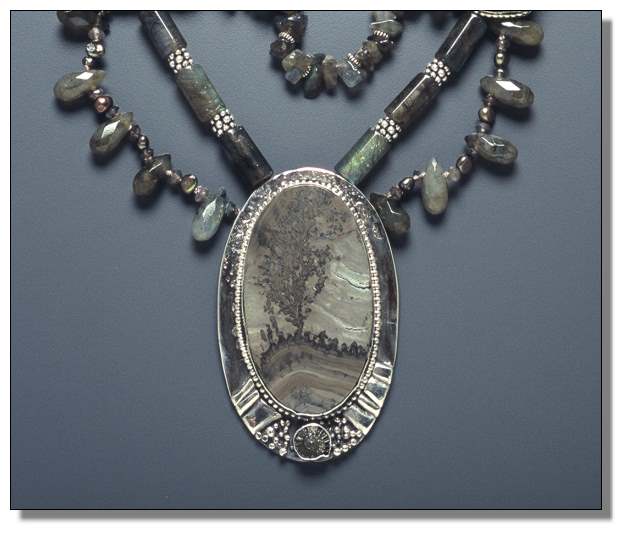

 Stromatolite (England) cut by Eidos